
Translation is increasingly discussed as a “technical problem” that can be “solved” through automation. Yet a recent story published by Politico shows that translation has never been JUST a technological process. It is an act of bearing witness.
At the European Parliament, 11-year-old Roman Oleksiv described the last time he saw his mother beneath the ruins of a hospital in a devastated Ukrainian city. As the interpreter conveyed the boy’s words, she paused. She took a breath, became emotional, apologised and could not continue. A colleague took over, while she placed a hand on the boy’s shoulder. That moment – the pause, the tears and the quiet human gesture – communicated more than any perfectly translated sentence could.
Machine translation would not have stopped. It would have translated “the last time I saw my mother” as smoothly and emotionlessly as “my name is Roman”. Without distinction. Without compassion. Without understanding what lay behind those words.
This matters greatly in a business context. Companies often use machine translation for everyday needs, and that is entirely understandable. But in legal texts, sensitive communication, crisis management, and employee or customer experiences, language is not merely information. It shapes trust, reputation and even decisions.
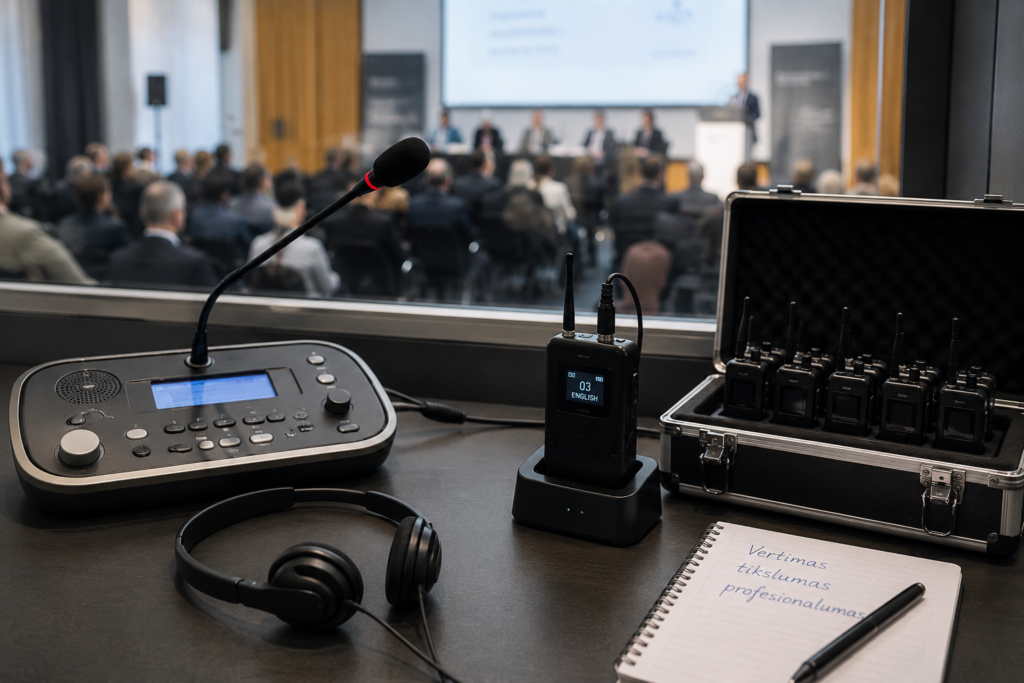
A professional translator does MORE THAN convey words. They make ethical and semantic decisions and understand when a pause matters more than a sentence, or tone more than literal accuracy. This is not inefficiency. It is care made visible.
Technology has its place. But when we speak about what truly matters, the human presence is irreplaceable.